




Financial Modelling with Spreadsheets

Build transparent spreadsheet models using clear assumptions, linked calculations and structured scenario testing.
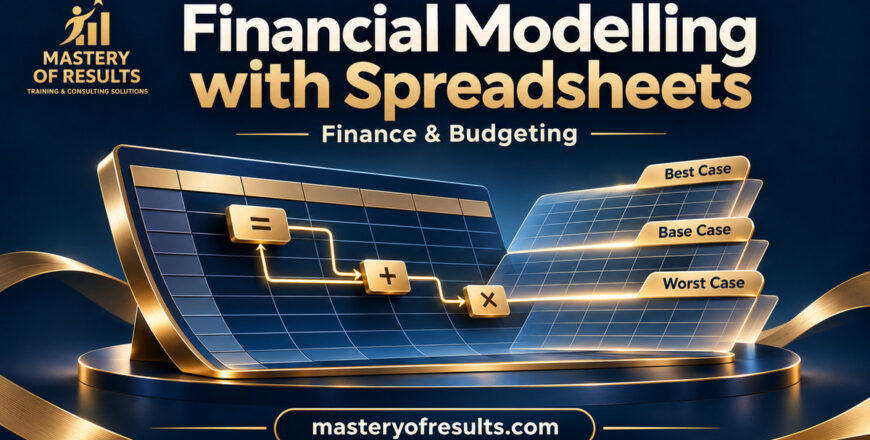
Financial Modelling with Spreadsheets - Designed Course Cover
  • Description

Five-day professional program. Approximately 25-30 training hours. Final agenda, language and delivery arrangements are confirmed in the proposal.

Course Overview

Build transparent spreadsheet models using clear assumptions, linked calculations and structured scenario testing.

This five-day professional program combines focused discussion, practical workshops and a course-specific applied project. Participants work with sample information or anonymized organizational cases and develop outputs that can be adapted to their workplace.

Learning Outcomes

Develop and review a practical model design blueprint.

Develop and review a practical linked model worksheets.

Develop and review a practical driver-based cash-flow model.

Develop and review a practical sensitivity and model-check pack.

Develop and review a practical reviewed financial model.

Who Should Attend

Financial analysts, accountants, planners and business professionals with spreadsheet experience.

Relevant professional experience is recommended. The final level and case complexity can be adapted to the participant group.

Training Methodology

Interactive discussions, worked examples, case analysis, practical workshops, role practice where relevant, peer feedback and a final applied presentation.

Assessment can include a short baseline review, evaluation of practical outputs and the final project. Attendance and completion requirements are agreed in the proposal.

Course Tools and Templates

Model design blueprint template or working document.

Linked model worksheets template or working document.

Driver-based cash-flow model template or working document.

Sensitivity and model-check pack template or working document.

Reviewed financial model template or working document.

Delivery Requirements

Classroom, live online and private organizational delivery are available by agreement. The final venue, platform, session timing, training language and required materials are confirmed during planning.

Participants should bring a laptop where the exercises involve models, dashboards or digital tools. Software selection, licensing and any prerequisite skills are agreed before delivery.

Course Customization

The proposed five-day sequence can be adapted to the organization, industry, participant experience and learning objectives. The final agenda and practical activities are confirmed in the written proposal.

Course Outline

Proposed sequence, subject to the agreed training proposal.

Day 1 – Model structure and assumptions

Assess the context, review a representative scenario, and identify priorities related to model structure and assumptions.

Practical output: Model design blueprint.

Day 2 – Linked calculations and model integrity

Compare approaches, interpret sample information, and develop a structured approach to linked calculations and model integrity.

Practical output: Linked model worksheets.

Day 3 – Cash flow, drivers and forecast logic

Apply the course tools to a realistic workplace scenario focused on cash flow, drivers and forecast logic.

Practical output: Driver-based cash-flow model.

Day 4 – Scenario, sensitivity and model checks

Test a proposed approach, discuss exceptions and responsibilities, and refine scenario, sensitivity and model checks.

Practical output: Sensitivity and model-check pack.

Day 5 – Model review and presentation

Integrate the learning, present recommendations, and build an implementation plan for model review and presentation.

Practical output: Reviewed financial model.

Mastery of Results training and consulting solutions. Gold waves and Kuala Lumpur skyline.
More Information